Sign Facelift vs. Full Replacement: Which Is Right for You?
Cost comparison, permitting differences, timeline considerations, and return on investment analysis for restoring your existing sign versus replacing it entirely in the Omaha and Lincoln Nebraska metros.
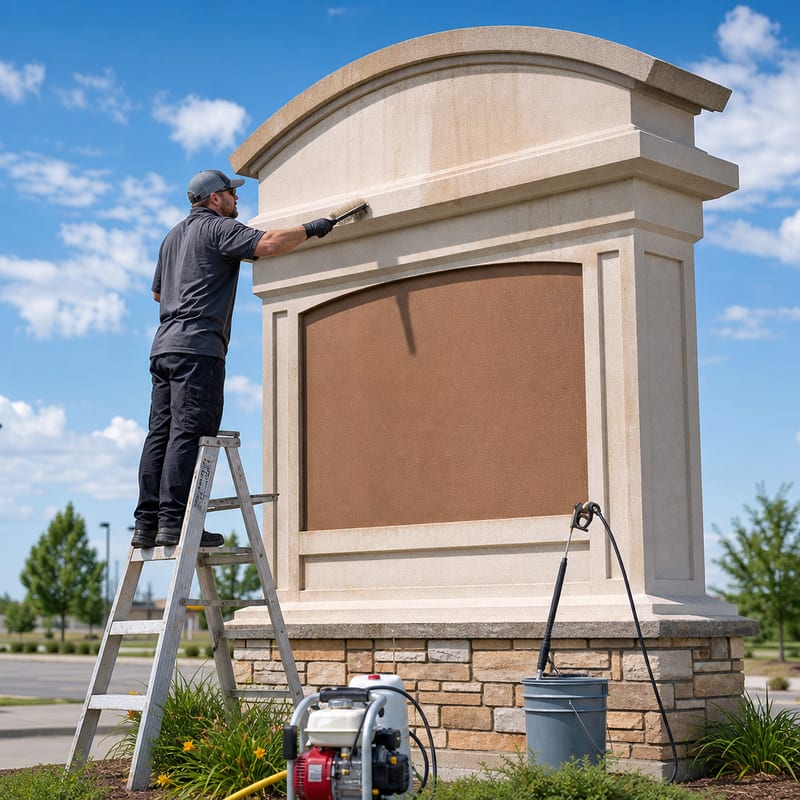
Restore What You Have or Start from Scratch?
Every sign owner eventually faces this question: your sign is looking tired, faded, or damaged, and something needs to be done. But what? Do you invest in restoring the sign you have, or do you tear it down and start fresh with a brand new one? It is a significant financial decision, and the right answer depends on several factors that are unique to your sign, your property, and your situation.
In our experience restoring hundreds of signs across the Omaha and Lincoln metros, the vast majority of aging signs are better candidates for restoration than replacement. The reason is simple: most sign structures are fundamentally sound even when the visual surfaces are degraded. The steel frame, the aluminum cabinet, the mounting system, the electrical infrastructure, and the masonry base typically have years or decades of remaining service life. What has failed is the visual layer — the faces, the paint, the graphics, the lighting — and that is exactly what a professional restoration replaces.
Cost Comparison: Facelift vs. Replacement
These representative cost ranges are based on typical projects in the Omaha and Lincoln metro areas. Every sign is unique, so your actual costs may vary, but the relative savings are consistent.
Monument Sign Facelift
A comprehensive monument sign facelift — including new sign faces, LED lighting retrofit, full repainting of the cabinet and base, and new vinyl graphics — typically ranges from $3,000 to $8,000 depending on the size and complexity of the sign. This restores the sign to like-new appearance and performance while retaining the existing structure and foundation.
New Monument Sign
A brand new monument sign — including engineering, permitting, foundation work, fabrication of a new cabinet and structure, new sign faces, LED lighting, and installation — typically ranges from $15,000 to $40,000 or more for a comparable size and configuration. That is four to six times the cost of a facelift for the same visual result.
Pylon Sign LED Retrofit
An LED retrofit on an existing pylon sign — replacing fluorescent tubes with LED strips, bypassing ballasts, and servicing the cabinet — typically ranges from $2,500 to $7,000. Replacing the entire pylon sign with a new one of comparable height and size ranges from $20,000 to $60,000 or more. The retrofit delivers the same visual result for a fraction of the cost.
The Permitting Advantage of Restoration
No New Sign Permit Required
In both Omaha and Lincoln, restoring an existing sign — replacing faces, repainting, retrofitting lighting — does not require a new sign permit because you are not changing the sign's size, height, setback, or square footage. You are maintaining an existing permitted sign. This saves permit fees, plan preparation costs, and the four-to-eight-week wait for permit approval.
No Code Compliance Upgrades
New signs must comply with current sign codes, which may have changed significantly since your original sign was permitted. Current codes in both cities may require smaller sign area, greater setbacks, different heights, or even prohibit certain sign types entirely. Restoration lets you keep your existing sign's grandfathered dimensions and placement.
No Engineering or Foundation Work
New pylon and monument signs require engineered foundations, structural calculations, and soil reports — all adding cost and time. Restoration uses the existing foundation and structure, so there is no engineering, excavation, concrete, or cure-time required.
Faster Completion Timeline
A typical sign restoration project in the Omaha or Lincoln metro takes one to three weeks from contract to completion. A new sign project takes eight to sixteen weeks when you include design, engineering, permitting, fabrication, and installation. If you need your sign looking good quickly, restoration is the clear choice.
Honest Cases Where a New Sign Is the Better Call
We are in the restoration business, but we will not try to restore a sign that should be replaced. Here are the situations where a new sign is genuinely the wiser investment.
Structural Failure
If the sign structure itself — the steel frame, the cabinet, the pole, the anchor bolts — has corroded, fatigued, or shifted to the point of being unsafe or unrepairable, a new sign is the only responsible option. Fortunately, this is rare; most sign structures outlast their visual components by decades.
Sign Code Changes Require It
If your business is relocating, your property is being redeveloped, or a city-initiated code compliance action requires sign removal, restoration of the existing sign may not be an option. In these cases, a new sign designed to current code is necessary.
Complete Design Change
If your rebrand requires a fundamentally different sign type — switching from a monument sign to a pylon, for example, or changing from a cabinet sign to individual channel letters — the existing structure cannot be adapted, and a new sign is needed.